


Perimenopause weight gain, especially around the middle
Why weight redistributes to the abdomen in midlife even when nothing about your eating changed, what is hormonal and what is ageing, and the approach with the strongest evidence behind it.
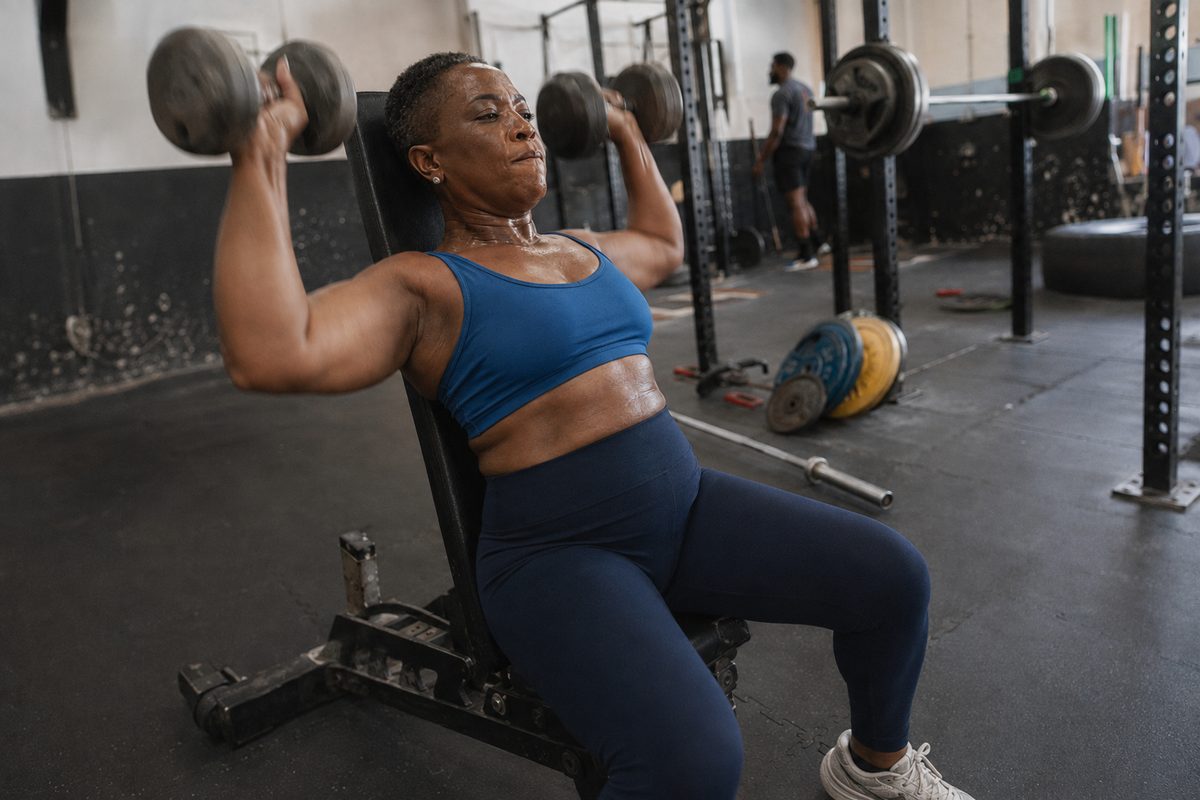
Weight gain in midlife is driven mostly by age-related muscle loss and a falling metabolic rate, while the redistribution of fat to the abdomen is driven mostly by falling oestrogen. That distinction matters: the transition changes where weight sits more than it changes how much arrives. The intervention with the best evidence is resistance training with enough protein to support it, not more cardio and fewer calories.
What to hold on to
- Where the weight sits changes even in women whose total weight does not. Waist measurement is the more useful number here.
- Muscle mass declines with age, and muscle is metabolically expensive tissue. Losing it lowers the rate at which you burn energy at rest.
- Cutting calories further while doing more cardio tends to cost you muscle, which makes the underlying problem worse.
- Abdominal fat is metabolically active and is associated with cardiovascular and metabolic risk, so this is a health question rather than only an appearance one.
- Sleep loss and alcohol both work against you here, and both are commonly disrupted in the same years.
The thing women notice first
Not the number. The shape. Trousers that fasten but sit differently, a waistband that has become the deciding factor in what gets worn, a stomach that appeared without any corresponding change in behaviour.
This is the single most reliable description in this category, and it is also the one most likely to be met with advice to eat less and move more, which is both unhelpful and slightly insulting to someone who has already tried it.
What the evidence separates out
Two processes run at once in this decade.
The first is ageing. Muscle mass declines steadily from around the fourth decade unless something is actively done about it. Muscle is expensive tissue to maintain, so as it goes, resting energy expenditure falls. Less muscle also means less capacity to buffer glucose after meals.
The second is the hormonal transition, which changes where fat is stored. Falling oestrogen is associated with a shift from the hips and thighs towards the abdomen, including visceral fat around the organs. This is the part that is genuinely new, and it is the part that carries metabolic and cardiovascular implications.
What actually works
Resistance training, two to three times a week, progressively loaded. This is the only intervention that directly addresses the muscle loss underneath the metabolic change, and it is well tolerated at any starting point.
Enough protein to support it. Most guidance aimed at midlife women lands around 1.2 to 1.6 grams per kilogram of body weight per day, spread across meals rather than concentrated in one. Food counts the same as powder.
Protecting sleep, because short sleep alters appetite regulation and makes everything else harder. Reducing alcohol, which contributes calories and disrupts the sleep you are trying to protect.
What does not work well, on the evidence: increasing cardio while cutting calories further. It produces short-term scale movement at the cost of the muscle you most need to keep.
What else could cause this
Not everything in your forties is hormonal. These are the other explanations worth ruling out, and how they usually differ.
- Hypothyroidism
- An underactive thyroid causes weight gain with fatigue, cold intolerance, constipation and dry skin. Common in this age group and easily tested.
- Insulin resistance or type 2 diabetes
- Central weight gain with fatigue, thirst or a family history warrants a fasting glucose and HbA1c rather than an assumption.
- Medication
- Some antidepressants, steroids, beta blockers and antipsychotics cause weight gain. Worth reviewing rather than blaming yourself.
- Polycystic ovary syndrome
- If central weight, irregular cycles and unwanted hair growth have been present since your twenties, this is a longstanding picture rather than a new one.
- Cushing's syndrome
- Rare, but produces central weight gain with a round face, easy bruising, purple stretch marks and muscle weakness. A distinct enough picture to be recognised.
When to speak to a professional
- The gain has been rapid or unexplained.
- You have fatigue, cold intolerance, thirst or hair changes alongside it.
- Your waist measurement has crossed 80cm and you have a family history of diabetes or heart disease.
- You have not had thyroid function, glucose and lipids checked in the last two years.
Seek care urgently, not an appointment next month, if: rapid unexplained weight gain with swelling or breathlessness.
Is this one thing, or part of a pattern?
Most women arrive noticing one change and find four more they had filed under stress or a bad week.
Four minutes. Your result appears before anything is asked of you.
Take the 4-minute checkRelated questions
Is it the hormones or is it just getting older?
Both, doing different jobs. The best available longitudinal data suggests total weight gain in this decade is driven largely by ageing and declining activity, while the shift of fat towards the abdomen is driven by the hormonal transition. That is why women often report the scale barely moving while their clothes stop fitting.
Will hormone therapy make me lose weight?
It is not a weight-loss treatment and should not be prescribed as one. Some evidence suggests it may modestly reduce abdominal fat accumulation, but the reason to take it is symptom control and, in some cases, bone protection.
Why has cardio stopped working?
It has not stopped working for cardiovascular fitness, which matters enormously. It is simply the wrong tool for the specific problem of preserving muscle. Doing more of it while eating less tends to accelerate muscle loss, which lowers resting metabolic rate further. Resistance training is the tool that addresses the actual mechanism.
Things that often come together with this
Sources
Updated 27 August 2026
The questions to ask your doctor
A one-page guide built from what women told us their appointments were missing. Free, and we will not sell you anything in it.
One email to deliver it, then a weekly note you can leave whenever you like. We never sell your address, and we never attach it to anything you type into the check or the assistant.